downthetubes is undergoing some main site refurbishment...

This blog is no longer being updated

The downthetubes news blog was assimilated into our main site back in 2013.

Hop over to www.downthetubes.net for other British comics news, comic creating guides, interviews and much more!
Showing posts with label Copyright Issues. Show all posts

Sunday, 8 July 2012

Comic Creators voice protest to proposed UK copyright law changes

(Updated 9/7/12 with comments from various creators about the plans)

Comic creators are raising concerns about changes afoot to copyright law in the UK, effectively stripping away long held rights and potentially handing the handling of your copyrighted creations to new 'colllecting agencies'.

The new legislative measures to update the UK's copyright licensing system were announced last week, which the British government claims will "help strengthen the system and boost its contribution to the economy and society."

New clauses primarily drafted to address the problem of 'orphan works' material where the original creator might be unknown, will now be included in the Enterprise and Regulatory Reform Bill, currently being discussed in Parliament.

The proposals, if approved, would:
  • allow the creation of a future ‘orphan works’ scheme to open access to valuable material that currently can’t be licensed or used
  • put in place a voluntary regime for extending collective licensing to help reduce complexities in the system
  • reserve a power to introduce statutory codes of conduct for collecting societies if they fail to operate to minimum standards.
The proposed changes are complex, but essentially would remove an automatic right to copyright.

This isn't DownTheTubes usual area, but I feel it's an important matter for all British comic creators who might be reading this.

Whatever your view, you should not ignore what is being cooked up by our government.

The actual proposals are outlined here on the Intellectual Property Office web site (PDF): http://www.ipo.gov.uk/response-2011-copyright.pdf

Writing for tech site The Register, Andrew Orlowski argues photographers, illustrators and authors will be amongst those to lose their digital rights under the radical new proposals published by the Government today.

"New legislation is proposed that would effectively introduce a compulsory purchase order, but without compensation, across an unlimited range of creative works, for commercial use," he notes. "Millions of amateurs who today post their images to Flickr and automatically receive the full protection of the law, would also lose, unless they opted-out.

"The changes involve orphan works reform - floated as Clause 43 of the Digital Economy Act in 2010 but killed off by photographers - and an Extended Collective Licensing (ECL) program. The white paper follows intense lobbying by the culture sector and large corporate users of copyright works, such as Google, who wish to lower their costs."

Comic creator Jim Campbell has started a petition protesting at the proposed changes.

"I'm not a lawyer, and I'm certainly not an expert on copyright, so I would urge you to read the government's consultation document and form your own opinion," he says. "The document, in so far as I understand it, raises a number of areas of concern.

"The proposed changes to the law on orphaned works will mean that all works where the copyright holders are unknown or uncontactable will be assumed to be available for commercial exploitation," he argues, "and the rights to do so will be left in the hands of 'collecting societies' who will be able to negotiate licenses to use material without the express permission of the material's creators.

"This represents a fundamental reversal of creators' current rights under copyright law and requires creators to explicitly assert their rights over material or face losing those rights. The government is quick to defend the intellectual property rights of big business and should do no less on behalf of the individuals and smaller creative organisations who contribute so much to the country's economy and character."

Signees so far include Dave Gibbons, John Ridgway and many other key British comic creators.

“I already see far too many instances of creative work being plundered for profit,” notes comic creator Simon Coleby. “This legislation serves only to legitimise that unethical and unfair practice, and is only in the interests of those who wish to unscrupulously benefit from other peoples' creativity.”

"What I create is mine to pass to those I want it to go to, not to have it stolen by suits who are allowed to say they have "searched dilligently but in vain" for the copyright holder,” argues John Ridgway.

“These changes skew things far too much in favour of big corporations who already have the resources and legal muscle to protect their interests," feels Roger Langridge, “effectively allowing them to exploit small companies and individuals with the full protection of the law. It's just wrong.”

“This was something I was very active with when the Orphan Rights Bill was being forced through the US Government a while ago,” says comcic creator and publisher Tim Perkins. “Creative people have rights and this is yet another example of corporate and super-rich greed. Orphaned works can be obtained if the Canadian example is employed. This is just another lazy way for legislation to grab "Real" orphaned works and make it so that larger corporations and publishers can 'Steal' new works as well, knowing most creative people could never sustain any real amount of protection!"

Announcing the changes, Business Minister Norman Lamb said: "It is vital that we make the most of our creative industries, boosting their contribution to the economy while ensuring protection of the rights holders. The copyright licensing system has been behind the times and we need to modernise and make it fit for the 21st century.

"The measures we plan to introduce as soon as possible would make it easier for those seeking access to, and use of, copyrighted works. Freeing up so-called ‘orphan works’ will allow use of works for the first time, making the most of untapped economic and creative potential. Extending licensing arrangements for collective societies, whilst ensuring rights holders are protected, will also help maximise the benefit for the UK’s world-class creative industries."

The draft clauses will be subject to scrutiny as part of the Bill’s progress through Parliament. These measures were developed by Government in response to recommendations from the Hargreaves Review of Intellectual Property, which was published in August 2011, which is broken down into somethingsome folk may be able to better get their heads around on the blog for Action on Authors' Rights.

You can read Jim Campbell's thoughts on the proposals here on his blog

View Jim's petition against the proposals 

• The Government’s policy statement: Consultation on modernising copyright (PDF, 406Kb) is available on the Intellectual Property Office website

Friday, 25 September 2009

Copyright: Internet Access Cut Off No Answer, say Greens

Europe's Green Party has stepped into the battle about copyright and piracy, which increasingly affects comics publishing as comics are scanned as soon as they are published and re-distributed free online.

Last week, the French National Assembly adopted a modified version of controversial 'Hadopi' legislation against online copyright infringement. The approved 'Hadopi 2' law now sets out a simplified procedure with a single judge to examine the charges brought by the administrative agency which retains controversial aspects of the original proposal: harsh financial penalties and the option to withdraw Internet access - the latter also being mooted in the UK by the Labour government.

"We regret the French National Assembly's decision, which officially advocates the penalty of barring Internet access," commented Daniel Cohn-Bendit, President of the Greens/EFA group and Helga Truepel, Vice Chairman of the European Parliament's Culture Committee in a joint statement. "When the European Parliament voted on the EU telecoms package of legislation, we supported the maintenance of Amendment 138.

"We stand firm on our demand: there must be no withdrawal of an internet connection without a prior judicial decision. We remain opposed to the 'Hadopi' law, even in its modified form, because it still fails to provide for a fair trial and goes against the principle of presuming innocence."

The Greens are calling for copyright to protect cultural and creative content from being posted on the Internet against the will of its creators but argue the penalties foreseen in 'Hadopi 2' will do nothing to resolve the conflicting interests of different groups.

"We call for the development of a new copyright system that will respect the rights of artists, without curbing the potential of the Internet," stated Cohn-Bendit and Truepel. "Freedom of communication, the presumption of innocence and a meaningful role for the courts must not be compromised."

Tuesday, 25 August 2009

Comic Piracy on the Net: New Clamp Down Plans Announced

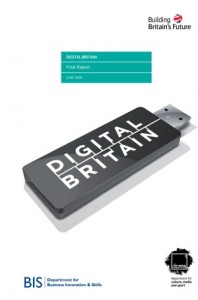
digitalbritaincover-198x300.jpgBritish fans sharing e-versions of comics via the Internet could soon come under the spotlight of anti-piracy organisations, after the government announced further measures to tackle digital piracy, mid-way through the consultation period on its Digital Britain report.

The Guardian reports that these include cutting internet connections for persistent offenders who share film, music and book files - which would, we assume, include comics - on a peer-to-peer basis.

This measure is unexpected as it was ruled out in the final Digital Britain report which was released in June, for "going too far".

In the report, the then communications minister Lord Carter said illegal filesharers should receive letters warning them their activities could leave them open to prosecution. If that failed to reduce piracy by at least 70%, Ofcom would have the power to call on internet companies such as BT to introduce so-called "technical measures" to combat piracy. The most draconian of these measures was to slow down a persistent filesharer's broadband connection, but it would not appear until 2012.

Now, the Guardian reports, the government is proposing illegal filesharers will still get warning letters but if they continue to swap copyrighted material they could have their internet connection temporarily severed, although it may be possible to retain basic access to online public services.

It is also expected that the government will give power to target illegal downloaders to ministers, rather than Ofcom, "to speed up the process".

The Guardian quotes a draft of the new plan as saying: "The previous proposals, whilst robust, would take an unacceptable amount of time to complete in a situation that calls for urgent action."

France recently tried to introduce similar measures but they were ultimately thrown out by its high court as unconstitutional. In the UK, privacy groups are likely to challenge any similar legislation as contrary to human rights law.

Comics piracy is a major concern to both large and small publishers, although it has also, fans argue, helped comics fans 'sample' new titles (the try before you buy argument) and enabled the dissemination of vintage comics material, much of it unlikely to ever be published in print due to licensing issues and limited appeal.

Unfortunately, many of those efforts by fans to raise the profile of vintage material are being exploited by pirates who then collect such scans and re-sell them as illegal digital collections on eBay. The BBC, for example, is aware of illegal sales of fan collections of digital scans of classic Doctor Who material from comics such as TV Comic and Countdown.

While several programs have been created to read digital comics on screen there is, currently, no legal Internet equivalent of iTunes for digital comics. However, many comics are being re-formatted for presentation on devices such as the iPhone, Android and other devices. For more on such releases, visit the downthetubes Mobile Comics blog.

More Web Links


Digital Britain Report


Digital Britain Forum


Discussion site aimed at encouraging an online debate about the issues raised in the Digital Britain Report.

Wednesday, 18 February 2009

Britsh Comics Art on EBay

Artwork from Steel Claw from Valiant, Robot Archie from Lion and Black Bow from Eagle is currently on sale on eBay, more work that was sold off by IPC a couple of years ago when it cleared its archives.

The offerings are all being auctioned by Blase Books as being from the Peter Hansen Five Star Collection IPC Archives, with a stamp of authenticity on the back of the art.

The Steel Claw page by Jesus Blasco, which shows anti-hero Louis Crandell "dematerializing", is taken from the Valiant dated 25th July 1964.

Also on offer for just a few more days is a page of Black Bow by Frank Humphries from Eagle; a page of Kelly's Eye art by Solano Lopez from a 1973 edition of Valiant; and a page of The Spider, fighting Spider-Boy, from Lion by Reg Bunn.

While IPC considered itself within its rights to sell the comic art back in 2007, some surviving artists have hotly contested their claim to ownership of the physical art featured in many past comics, arguing the company only holds rights to publish not ownership to the art. There has been no test case, we believe, as to the ownership of the physical art but we believe it's only a matter of time before there is.

However, it should also be noted that some publishers in the past demanded a fee from the artists for the return of their art. In an upmcoming interview a Misty comic special, veteran girls comic artist John Armstrong indicates this was the demand of Fleetway when he worked on that title.

Rich Johnston then noted in his Lying in the Gutters column for Comic Book Resources that artist Pura Campos was battling to have IPC recognize her ownership of Patty's World, which featured in Princess Tina in the UK but was reprinted in several other countires and still has a massive following in Pura's home country, Spain.

Monday, 16 February 2009

Kiwi Comic Creators Join Copyright Protest

New Zealand's new Copyright Law presumes 'Guilt Upon Accusation' and will Cut Off Internet Connections without a trial. Join the black out protest against it!


New Zealand comic creators have joined a nationwide protest this week (16-23 February) protesting against new copyright laws there, that could see anyone perceived as infringing copyright lose their internet connection -- including schools and libraries.

The Guilt Upon Accusation law 'Section 92A', which will class anyone who provides any form of services over the Internet is an ISP, calls for internet disconnection based on accusations of copyright infringement without a trial and without any evidence held up to court scrutiny.

Despite mass protest, co-ordinated by the Creative Freedom Foundation, the law is due to come into effect on 28th February unless immediate action is taken by the governing National Party.

Under the new law, one of the most draconian pieces of copyright legislation anywhere -- and of a form that has already been rejected by the British government because it's fraught with problems and impossible to enforce fairly -- libraries, councils, schools, businesses, government offices could fall foul of its wording. If an internet user shares your Internet connection with friends, even they are probably an ISP too under the new act.

Thousands of New Zealanders are already blacking out their Facebook photo, websites, Myspace pages and Twitter account, in protest against this new law that may come into effect on 28 February.

The CFF argue the new copyright law, which could of course be implemented elsewhere, is now having the effect of limiting artists, restricting businesses, and harming public rights. "The Creative Freedom Foundation speaks for artists concerned at this trend and through Our Goals we seek to bring Copyright Law into the 21st Century.

"Artists do things with text that would be illegal if they did them with audio or video because copyright law hasn't kept pace with technology," the CFF argue. "Copyright law was designed in a time where consumers couldn't publish widely and they remixed only in text, a culture before people had access to video and audio editing computers.

"The harm of the existing scheme is that it criminalises many types of expression. People are already remixing video and audio to comment on elections, to make new music and video, and it's a worthy contribution. We should talk about ways to avoid criminalizing popular media, social commentary and potential businesses."

• If you're a New Zealand creator or want to show support for the campaign, just use this image (Right-click, Save-As) with the text:

(your name) is blacked out: Stand up against "Guilt Upon Accusation" for New Zealand http://creativefreedom.org.nz/blackout.html
• Instructions for Creative Freedom Blackout Campaign Details
• More background to the Act and the protest at: www.geekzone.co.nz/juha/6247

Thursday, 10 July 2008

Stealing Dilbert

When the G8 governments met in Japan this week, one of the items on the agenda that has been discussed in secret for months was signing an agreement that could enable customs officers and others to search your laptop or MP3 player for illegal material as you pass through a country's borders.

The Guardian reports on government plans to ratify the Anti-Counterfeiting Trade Agreement in an article weighing up the pros and cons of the 'free' internet and attempts by various copyright owners to keep a hold on their material and their right to do what they want with it, Such efforts, says Saul Klein, a venture capitalist with Index Ventures who has invested in the free database company MySQL, exhibit a "finger in the dyke" mentality.

"In a world of abundance - which the internet is quintessentially - that drives the price of everything towards 'free'," he argues. "People don't pay for any content online. Not for music, not for video. They get it, either legally or illegally."

The battle between content creators and content users wanting it for 'nothing' is growing, encompassing the comics as well as the music and film industries. The Guardian reports that Scott Adams, the cartoonist best-known for his Dilbert strips, stood up for his work in a blog post in April last year, where he reasserted his ownership of his products.

"When you violate a copyright, you take something valuable from the copyright owner that he can't get back," he noted "... After I published The Dilbert Principle, within days it had been illegally scanned and was widely available on the internet for free. Technically speaking, it wasn't theft. But I still lost something. I (and my publisher) lost the ability to decide if, when, and how to publish as an e-book."

Unmentioned in the Guardian article is the fact that all this action by governments to combat what they see as widespread copyright theft is the apparent lack of any opportunity for the public to comment on the plans.

The Act would of course lend more weight to US government search and seizure of laptops and other eletronic equipment, highlighted by the Los Angeles Times recently, as we previously reported.

IP Justice, which is campaigning against ACTA, notes on its web site that as of 25 March 2008, no draft text had been published to provide the public with substance of the proposed international treaty. A “Discussion Paper on a Possible Anti-Counterfeiting Trade Agreement” was reportedly provided to select lobbyists in the intellectual property industry, but not to public interest organizations concerned with the subject matter of the proposed treaty. Indeed, it wasn't until Wikileaks posted the leaked ACTA discussion paper on 22 May 2008 that such groups got any idea of what is being planned.

The leaked document
revealed "a proposal for a multilateral trade agreement of strict enforcement of intellectual property rights related to internet activity and trade in information-based goods, hiding behind the issue of false trademarks" and some of the wording suggested the potential for widespread "stop and search" to combat copyright theft.

Read The Guardian article: "The right to peer inside your Ipod"
IP Justice Campaign against ACTA
Wikileaks version of the leaked ACTA discussion paper
MIT engineer Erik J. Heels on copyright issues relating to Dilbert

Thursday, 29 May 2008

Copyright Theft: A New Weapon?

We've on occasion reported on some blatant copyright theft of comic artists' work, but a new specialist search engine could help creators track down culprits a bit more easily.

MicroStock Insider, a guide blog to selling stock photography on the web, reports on TinEye, a visual search engine which allows you to search for your images by submitting an image for it to analyse. It returns a series of hits which are pages where it thinks it has found a match for your images. It works by comparing the pixels and shapes in the images not by searching for meta tags or matching file names. (Meta tags, for those who don't know, are information you can add to an image to describe it using photo applications such as Photoshop -- surprisingly, few artists seem to do so).

TinEye is in beta development and there is currently no charge for it: you need to request a membership. Test results were very good, according to MI, and the engine also offers a Firefox plugin which it makes it as simple as navigating to any page (e.g. one with your images on them) right clicking and selecting Search Image on TinEye.

This makes checking your images much easier if you have a gallery of them online at a reasonable resolution that Tineye can access.

Due to the limited size of the current image index it's not really possible to use Tineye to perform any sort of license enforcement checking or measure how frequently used your images are used, but this could be a useful tool as it expands its search parameters. TinEye also cannot do facial recognition or find similar images, it can only find the exact same image, but it's worth bookmarking, I think.

Top technology site TechCrunch has also just posted their review of TinEye, making the point that there are other ways the technology could be applied. If Idée can figure out a way to seed the images it finds with tags, or combine its approach with a text-based index, it could create an image search engine that is really good at finding exactly what you are looking for.

Interest in TinEye has been understandably huge and has bowled over the engine's development team, Idée, who develop a range of advanced image recognition and visual search software, who say TinEye has now had hundreds of mentions on blogs, forums and websites around the world.

Thursday, 15 May 2008

Adipose Copyright Battle Escalates

(First posted 9/4/08, updated, 15/5/08): The Adipose began to take over Britain just days after the screening of the opening episode of the fourth season of Doctor Who, Partners in Crime.

The episode saw the Doctor and Donna (Catherine Tate) the villainous Miss Foster, a powerful business woman and alien Nanny (Sarah Lancashire), and her army of alien Adipose.

The cute Adipose - alien children created from excess fat from rotund couch potatoes (Adipose is the scientifiic name for fat tissue or body fat - no hidden meaning there, then) beyond the show, with an online petition demanding the BBC license a plush toy based on them and more.

Fortunately for Adipose fans, there seemed no need to wait until Christmas when such a toy might appear, because the nation's knitters stepped up to the plate and a lady known only as "Mazzmatazz" delivered a guide to making a woollen alien. Huzzah!

Unfortunately, this fan-created, not for profit pattern was ripped off by pirates who started selling Adipose online, prompting Mazzmatazz to remove the pattern from her site -- just as the patterns were also apparently attracting the attention of BBC Worldwide. Shame, but totally understandable. Given that knitter Hannah's talents extend to providing woollen hats for an Innocent drink ad campaign, perhaps the BBC will get her to come up with some official patterns - she also created designs for a knitted TARDIS, Ood and more.

A BBC News report published 14 May stated the patterns of Ood and Adipose were removed from her website after the BBC's commercial arm complained that they breached its trademark. "Mazzmatazz" says the corporation was "making an example of her".

"The patterns I created, inspired by Doctor Who, were never for sale," she stated on her web site. "They were shared under Creative Commons licenses, to prevent resale, so that other fans could enjoy and share the fun too.

"All I want is for the BBC to be fair. They either need to pursue all parties who have published without authorization instructions for Doctor Who crafts, or, they should permit all parties to publish fan-created instructions so long as they do not threaten the BBC’s intellectual property. To single me out for breach of copyright seems more like an act of making an example than a good faith defense of their copyright."

BBC Worldwide said it acted because finished figures were being sold by others on auction website eBay.

It also denied threatening legal action and as I hopd, it said it had indeed offered to consider marketing the designs itself.

The case is being publicised by the Open Rights Group, a lobbying organisation which specialises in digital rights issues. (There is a detailed analysis of the issues raised on Technollama by Andres Guadamuz, a member of the ORG and who has seen all the correspondence between the pattern creator and the BBC. The dispute boils down to the grey area of a fan providing a knitting pattern for fans in a not for profit manner and whether that is actually allowed. ORG's executive director Becky Hogge told BBC News: "["Mazzmatazz"] doesn't feel she's doing anything wrong yet she's being threatened with legal action."

"In the offline world, what she'd be doing would be fine. But because she's doing it online, which is a public space, it causes a problem."

A BBC Worlwide spokesman countered that it has every right to protect the BBC's commercial interests. "If you don't protect your trademark, it's taken away from you," he said. "And Doctor Who is massive for the BBC. It's up to us to earn money from it so we can re-invest it in the BBC,."

However this all turns out, and whether some flexibility in copyright law can be discovered - both for fans and for the BBC - I don't think there's been as big a rush to wool shops since The Clangers first aired in the 1970s...

(The official knitting pattern for the Clangers, by the way, is available from Peter Gregory of G K P Ltd, Springmill House, Baildon, Shipley, West Yorkshire, BD17 6AD. But there's an unofficial pattern here on the Radio and Space Plasma Physics Knitting Patterns page, if you're interested. (Amazing what you can find on a site supposedly devoted to a site supposedly about Leicester University's Co-operative UK Twin Auroral Sounding System...)

Latest News on downthetubes.net

Contact downthetubes

• Got a British Comics News Story? E-mail downthetubes!

• Publishers: please contact for information on where to post review copies and other materials: editor@downthetubes.net

Click here to subscribe to our RSS NewsFeed

Powered by  FeedBurner